A Consultant’s View Of The Enterprise Storage Market

This is part of an ongoing series of longer articles I will be posting every Sunday as part of an experiment in offering more in-depth content.

I am not the typical enterprise storage user. In fact, I am not an enterprise storage user at all - I am a consultant focused for over a decade on assisting enterprises with their storage architecture and strategy, working with businesses of all sizes. My background is both a blessing and a curse - I have seen far more enterprise storage environments in much more detail than most people, but I am unable to truly empathize with my corporate storage compatriots since it’s not really my gear and data that I am working with.

Based on this experience, what does the future hold? Where is enterprise storage heading? Read on for my thoughts.

Continue Reading »

Computer history
Enterprise storage
Virtual Storage

Comments

Permalink

Xen 3.3 Update Brings Paravirtualized SCSI
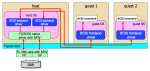
One of the new features in Xen 3.3, released this week, caught my eye: Paravirtualized SCSI (PVSCSI), which allows a guest OS to directly interact with a SCSI (or Fibre Channel) HBA. This should allow more specialized applications to be virtualized in Xen environments that use SCSI or FC storage without requiring the addition of a dedicated physical storage port per guest.


PVSCSI gives virtual machines direct access to SCSI and FC HBAs, and plays nicely with NPIV (Xensummit diagram by Fujitsu)

PVSCSI gives virtual machines direct access to SCSI and FC HBAs, and plays nicely with NPIV (Xensummit diagram by Fujitsu)

Functionally similar to VMware’s Physical Compatibility Mode for Raw Device Mode (RDM) volumes, PVSCSI enables certain applications that require direct SCSI communication to function in a virtual environment. Examples include Oracle RMAN, backup applications, and potentially SAN management software.

PVSCSI plays nicely with N_Port ID Virtualization (NPIV), too, so you don’t need to assign a physical HBA port to each guest - they can all share a port or two, and each would have his own N_Port on the Fibre Channel fabric.

In their Xensummit presentation about PVSCSI, Fujitsu showed impressive performance numbers, demonstrating that the technology doesn’t cause much of a performance hit even though it is substantially more complicated than the alternative approaches. I do wonder how PVSCSI managed to outperform Dom0 with 128k writes, but let’s chalk that up to insignificant variations in timing…

Now if only Xen would update the (3.2-era) readme files on their download page!

Enterprise storage
Virtual Storage

Comments

Permalink

The Next Wave of Virtualization


Real Video: The Next Wave of Virtualization

Server virtualization is pushing storage into a new world.  Luckily, N_Port ID Virtualization and 8 Gb Fibre Channel is here to deliver all the I/O these servers demand.  Ellen O’Brien of TechTarget interviewed me about storage virtualization after Storage Decisions last month, and the video is now live on their BitPipe site.

Topics covered include how server virtualization pushes I/O demands, N_Port ID virtualization, storage virtualization technologies, and management challenges.  We also talk about where these things are currently and how they can be used today.

Here are some of my trademark Pearls ‘o Wisdom:

  • “Systems that, in the past, wouldn’t need high-speed storage, suddenly face a drought of throughput”
  • “Without NPIV, storage devices tend to think they’re only talking to one server, but they’re not anymore”
  • “We’ve got virtual paths to virtual servers, so let’s have virtual storage as well!”
  • “It’s much harder to trace down a cable when that cable doesn’t exist”
  • “It’s as if we all suddenly had 200 mph cars - that’s great, but can we ever use them?”

Watch the whole video and let me know what you think!

Enterprise storage
Personal
Virtual Storage

Comments

Permalink