
VMware packed a lot into their 2008 VMworld conference, including an outline of their “three pillars” strategy, focused on vClient, vCloud, and something they are calling the Virtual Datacenter Operating System. While it is debatable if this last item really is an operating system, it’s certainly a major strategic change in messaging.
VDC-OS is divided into four “vServices” (Management, Cloud, Application, and Infrastructure), and one core Infrastructure vService is vStorage. Since my focus is enterprise storage, I thought I would take a moment to examine the current and future status of vStorage.
EMC’s Chad Sakac has taken up the challenge of communicating vStorage to the world, in a post to his blog, a pair of YouTube videos (multipathing, I/O dedupe), and (apparently) a session or two at VMworld. But I’m not sure it’s really entirely clear just what vStorage is and what this means to existing and future VMware storage developments. So let’s dive in and take a look.
vStorage = Storage vService for VMware Infrastructure
Let’s get one thing out of the way immediately: VDC-OS is not a new product – it’s a framework to organize VMware’s existing and future datacenter-targeted products like ESX. The company is sweeping away the current hodgepodge of server product elements and placing them all into a more-organized structure called VDC-OS.
As such, the whole thing is not fully baked at present – there are lots of missing elements, and these point to future products from VMware and others. I applaud the organization, and feel that this is the first really viable next-generation datacenter vision that I have seen. It accurately reflects the current reality of the corporate data center and includes a migration path to take it to a compelling new level.
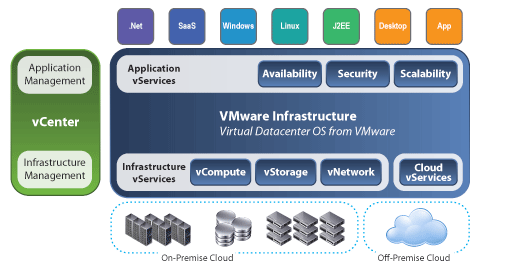
As we can see in VMware’s diagram (above), the Virtual Datacenter OS is made up of VMware Infrastructure, with application vServices resting on infrastructure vServices or the cloud. This last bit is the fundamental breakthrough that makes VDC-OS more than just slideware – if it works, applications (virtual appliances) can transparently move from local infrastructure to cloud infrastructure owned and operated by others. It’s transformative, and if they pull it off, this could usher in a new datacenter world.
vStorage is one of the core infrastructure services, along with vCompute and vNetwork. Although it’s not entirely clear at this point, vStorage presumably includes all existing VMware storage technologies as well as the new APIs for multipathing and I/O deduplication highlighted at the show. I envision a future in which vStorage is a set of APIs for everything from I/O to device management, and VMware even includes virtual storage appliances in this umbrella.
vStorage: What’s In It?
At the very least, vStorage includes the following:
- VMFS for shared storage
- Thin Provisioning support in VMware Infrastructure is apparently coming in 2009, but is also apparently incompatible with fault tolerance.
- Linked Clones is another desktop technology coming to VI 2009.
- The Site Recovery Manager API has also become part of vStorage, though this isn’t getting much press.
- VMware Consolidated Backup (VCB) will also apparently be a vStorage API.
- The existing snapshot API will also presumably included.
- The new API for Multipathing covers the old generic native multipathing (NMP) from ESX as well as EMC’s most excellent PowerPath. The latter is presumably an extra-cost option that enables lots of niftiness, as demonstrated by Chad in this video.
- Another new API claims to deduplicate I/O, reducing traffic for certain supported disk operations, as demonstrated in Chad’s second video.
What is in and what is out is still kind of up in the air. But you can see that vStorage includes most of our old favorites (VMFS, SRM, VCB), some desktop elements (thin volumes, linked clones), and some new surprises (PowerPath, I/O dedupe). There is enough meat here to separate this from traditional slideware: VDC-OS has legs!

Leave a Reply