
January 27, 2012

Hands-On Review: SLR Magic 35mm Sony NEX Lens

I would definitely recommend spending half as much on the SLR Magic lens rather than the Sony 16mm pancake

The Sony 18-55 mm tele-zoom remains my favorite NEX lens for its flexibility. Given this, I would definitely buy the SLR Magic 35mm lens before Sony’s overly wide 16mm pancake prime. But the SLR Magic would not be a good choice as the only lens on a trip. It’s a fun and fairly cheap toy, not a real photographic tool.

Building a Combination 3G/4G/Wired Wi-Fi Network
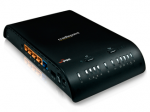
The CradlePoint MBR1200 forms the heart of my new mobile Internet system

The Tech Field Day events I run are hotspots of social media, but it has been hard building an Internet presence to keep up. Constantly on the move, I need a flexible network with scalability and failover (and fail-back) between 3G/4G and wired Internet. My latest design relies on CradlePoint’s MBR1200 “Failover Router”, which can load-balance across multiple 3G and 4G data cards.

Sony Enhances the NEX Line With Updated Firmware and the New NEX-C3
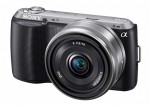
The new Sony NEX-C3 sports a higher resolution sensor in an even-smaller body

Sony has updated the impressive NEX “mirrorless” camera system, announcing the replacement of the NEX-3 and releasing new firmware with enhanced features. Although the new NEX-C3 will not appear until the fall, I am pleased to report that the new NEX firmware further enhances the usefulness of my NEX-5 camera.

Introducing the Eye-Fi X2 Card

The Eye-Fi promises simple connectivity for digital cameras, but does it really work?

One reason the smartphones like the iPhone are gaining ground on purpose-built cameras is their instant connectivity: Take a photo and you can immediately share it on Twitter, Flickr, Facebook, or other popular sites. Wouldn’t it be great if your SLR or digital camera could do the same? This is the promise of the Eye-Fi card: It adds Wi-Fi connectivity to most popular cameras, enabling you to transfer photos directly to your laptop or the Internet. If only it worked.

How Apple iCloud Will Challenge the Storage Status Quo
Apple's iCloud is not just MobileMe 2.0!

iCloud is a key enabler of the “post-PC” experience for iOS users. It supports wireless daily backup, storage of purchased music, apps, and books, and synchronization. It also has some interesting Mac OS X features, and it’s free. But the most-compelling feature of iCloud is what it means to future applications on iDevices, the Mac, and even Windows!

NetApp Unifies and Consolidates Software, Not Just Storage Capacity

NetApp has begun to unify their Onaro and Akorri acquisitions under the OnCommand Insight name

NetApp has expanded its storage software footprint, and recently unified these offerings under the “OnCommand” banner. Some of these products are intended solely for NetApp storage, but many are suitable for heterogeneous and even non-NetApp environments. Let’s take a look!

My Incomplete, Subjective List of Enterprise SSD Companies

Jean-Jacques Maleval posted a “complete list of 85 SSD manufacturers in the world” over at StorageNewsletter, and I was surprised to see so many unfamiliar names in the list. So here’s my own rundown of the enterprise SSD makers to keep an eye on in the coming year!

Three Key Storage Features Missing in Mac OS X “Lion”

Mac OS X 10.7 "Lion" lacks many of the storage features we've long hoped for, including ZFS, iSCSI, and USB 3.0

Apple is not in enterprise storage company to be sure, and news from WWDC dashes any hopes we had for ZFS and iSCSI support. USB 3.0 seems a foregone conclusion, but Apple seems intent on ignoring it as long as possible. Although I welcome the new storage features included in Lion, it is disappointing that these were left out.

Key Storage Features in Mac OS X 10.7 “Lion”

Mac OS X 10.7 "Lion" lacks many of the storage features we've long hoped for, including ZFS, iSCSI, and USB 3.0

Apple’s not an enterprise company or a storage company, but Apple does have enterprise storage features in their operating systems. And Mac OS X 10.7 “Lion” is a great case in point. From Versions to Time Machine Local Snapshots to AirDrop, Lion brings some storage love, and NFS, SMB, and Xsan are there, too. Let’s look at what’s new and key in terms of storage in the latest version of Mac OS X.

What Datacenter Equipment Is Apple Using?

This still from Apple's official video shows more NetApp storage and HP servers

During the WWDC “Stevenote” we got a rare glimpse into the mysterious Apple North Carolina data center. Two shots have been seen online so far: One showing swoopy Teradata racks and another open, exposing HP rack servers and what looks like a NetApp array. Since Apple spent billions building out this datacenter, and has kept their product choices very quiet, it’s amusing to try to suss out what they are using from their own promo video.