January 27, 2012

How Fast Is It? A Storage Infographic

How Fast is It - Storage

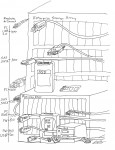
How fast is a hard disk drive? How about the various flavors of SATA and Fibre Channel? Check out this handy Pack Rat infographic to answer the question, “how fast is it?”

Microsoft Office 2011 for Mac Is (Finally) Here!
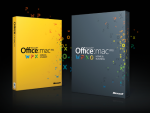
Office 2011 finally brings Outlook and Visual Basic to the Mac

Microsoft just released Office 2011 for Mac, and power users stuck with Office 2008 are really excited to upgrade. Pretty much anyone in a corporate setting has to use Office (sorry Apple and Google) so the Office 2011 upgrade is a Big Deal. I’ve been looking for the best deal on Office for Mac, and it’s hard to beat Amazon. They’ve got free shipping, and are already discounting the suite around 10%.

Back From the Pile: Interesting Links, October 29, 2010

Wrapping up this week, here are my shared items.

Flexible IT “Twitterview” With NetApp

I’ll be tweeting about Flexible IT today at the invitation of NetApp. I’d like to open this “Twitterview” up to anyone else who wants to join the conversation, lest this become a useless exercise in talking to ourselves. We’ll get online at 1 Eastern/10 Pacific (that’s 10:30 PM for my friends in Kolkata) and will be using the #FlexibleIT hashtag.

Flexible IT and the Path to the Services Future

IT is crossing a chasm, and we may not be prepared for the new direction we are taking

I’m an IT revolutionary. I talk all the time about the quaint backwards “state of the art” in enterprise IT, what with its (many) decades old protocols, paradigms, and practices. What we call modern is really just a charade of faked-out old-fashioned open systems infrastructure: Pretend servers talking to fake disks over frankenstein networking technology.

The Four Horsemen of Storage System Performance: I/O As a Chain of Bottlenecks

We continually shift between parallel and serial I/O paradigms

It is tempting to think of storage as a game of hard disk drives, and consider only The Rule of Spindles. But RAM cache can compensate for the mechanical limitations of hard disk drives, and Moore’s Law continues to allow for ever-greater RAM-based storage, including cache, DRAM, and flash. But storage does not exist in a vacuum. All that data must go somewhere, and this is the job of the I/O channel.

Back From the Pile: Interesting Links, October 26, 2010

Here are my shared links from the first half of the week, featuring more Apple stuff along with storage, virtualization, and a storage gorilla!

Caringo Bulks Up CAStor For Cloud Services

You may not know Caringo, but you have probably heard of cloud storage, EMC Centera, and Dell DX. Read on to learn the link!

Now that the hype of “cloud everything” is subsiding, organizations are getting down to work deploying cloud storage to do actual useful tasks. The march from CAS to cloud to object storage has seen high-profile high-end flare-ups (think EMC Centera and Atmos) but the bulk of work is done by more pedestrian (think lower-cost) hardware and software. Through it all, Paul Carpentier has been at the forefront. Now his company, Caringo, is back in the news, delivering much-needed storage service features like multi-tenancy, named objects, dynamic caching, and web services.

From CAS to Cloud: Revolutionary Storage

We need to move beyond fake disks and deploy application-centric storage

Change is not a word normally associated with storage, and revolution is practically unheard of. Today’s modern enterprise storage systems and networks employ massive resources to do one simple thing: Emulate the basic hard disk drives used over three decades ago. But cracks are appearing in our mausoleum of fake disks: Application developers are discovering the value of object storage, and storage systems are appearing to support this need.

Forecasting Seagate’s Next-Generation Momentus 5400.8 Family

Seagate's massive 1 TB laptop drive is almost here, packing almost 800 Gb per square inch

Seagate is one of the world’s most-successful hard disk drive companies, consistently ranked first in overall sales for a decade. The company is respected for their high-end products, but is aggressively moving into the world of smaller hard disks for laptops and portable storage as well. The company’s mainstream “Momentus” portable hard disk family has kept pace with the industry, but Seagate will soon break away with a major jump in areal density. Using public information, and the first product in this line, we will consider what Seagate’s eighth-generation Momentus family will look like.