What is VMware VDC-OS vStorage?

Hopefully vCloud, vClient, and VDC-OS are a little more solid (not to mention closer) than the Three Pillars of Creation in the Eagle Nebula

Hopefully, VMware's three pillars (vCloud, vClient, and VDC-OS) are a little more solid (not to mention closer) than the Three Pillars of Creation in the Eagle Nebula

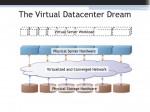
VMware packed a lot into their 2008 VMworld conference, including an outline of their “three pillars” strategy, focused on vClient, vCloud, and something they are calling the Virtual Datacenter Operating System. While it is debatable if this last item really is an operating system, it’s certainly a major strategic change in messaging.

VDC-OS is divided into four “vServices” (Management, Cloud, Application, and Infrastructure), and one core Infrastructure vService is vStorage. Since my focus is enterprise storage, I thought I would take a moment to examine the current and future status of vStorage.

EMC’s Chad Sakac has taken up the challenge of communicating vStorage to the world, in a post to his blog, a pair of YouTube videos (multipathing, I/O dedupe), and (apparently) a session or two at VMworld. But I’m not sure it’s really entirely clear just what vStorage is and what this means to existing and future VMware storage developments. So let’s dive in and take a look.

Continue Reading »

Enterprise storage
Virtual Storage

Comments

Permalink

VMware Virtual Datacenter Operating System: Heavyweight or Hot Air?

Paul Maritz of VMware dropped a bomb on Las Vegas today, introducing their Virtual Datacenter Operating System concept. But is VDC-OS a nuclear strike at the heart of the data center, scattering everyone from Microsoft to Cisco to (big daddy) EMC? Or is it just more hot air, conflating the latest big thing into a mirage of an operating system rather than a real challenger?

It could be big. There is no denying the effect VMware has had on the modern data center - nearly everyone I talk to in the IT industry considers server virtualization a fundamental element of modern infrastructure strategy. And server virtualization has done more for the deployment of enterprise storage and other high availability technologies, than any other movement, from green computing to services-based infrastructure. And it has encompassed these movements, becoming the way, not just a technology.

But is VDC really an OS? And will it conquer the data center? And would this be a good thing? There’s the rub.

First, the obligatory description. Virtual Data Center effectively re-badges lots of things VMware (and the server virtualization industry in general) have been working on as “vServices”. They divide these up into Application vServices, Infrastructure vServices, Cloud vServices, and Management vServices.

These four elements, in fact, do sound like a post-modern definition of an operating system, much more so than Google Chrome. VMware includes the ability to share resources, execute applications, and store data in a managed way. And the cloud component is reminiscent of how the old client/server architecture has evolved into our modern connected world. In this way, VDC really is an operating system for the enterprise data center, and extends it into a cloud beyond those doors.

This is the most compelling and realistic post-datacenter world I have heard of, thoroughly trouncing shared infrastructure, the (Amazon/Google) cloud, SaaS, Java or Linux everywhere, Sun’s containers, and Microsoft’s world of Windows. For the first time, we are talking about an infrastructure that could actually be built, wouldn’t require a forklift (or shipping container) or the migration to an entirely new software environment, and reflects the diversity of modern IT systems.

Certainly, VMware has heavyweights in their corner. Cisco provides the connectivity, EMC provides the storage, Intel provides the CPU, Dell provides the servers, and so on. But it’s not that simple. Like Microsoft, VMware will have to manage the “input” from every networking, storage, CPU, and server provider, not to mention the vast ecosystem of software components. It’s much more like Windows than Macintosh in this respect, with VDC being a loosely-federated OS rather than a closed monoculture.

I predict that how well VMware handles the divergent parties trying to play in their OS will determine the future not just of VDC, but of VMware itself.

Oh, and VMware also introduced View, perhaps the future of the desktop.

Enterprise storage
Virtual Storage

Comments

Permalink

Xen 3.3 Update Brings Paravirtualized SCSI

One of the new features in Xen 3.3, released this week, caught my eye: Paravirtualized SCSI (PVSCSI), which allows a guest OS to directly interact with a SCSI (or Fibre Channel) HBA. This should allow more specialized applications to be virtualized in Xen environments that use SCSI or FC storage without requiring the addition of a dedicated physical storage port per guest.


PVSCSI gives virtual machines direct access to SCSI and FC HBAs, and plays nicely with NPIV (Xensummit diagram by Fujitsu)

PVSCSI gives virtual machines direct access to SCSI and FC HBAs, and plays nicely with NPIV (Xensummit diagram by Fujitsu)

Functionally similar to VMware’s Physical Compatibility Mode for Raw Device Mode (RDM) volumes, PVSCSI enables certain applications that require direct SCSI communication to function in a virtual environment. Examples include Oracle RMAN, backup applications, and potentially SAN management software.

PVSCSI plays nicely with N_Port ID Virtualization (NPIV), too, so you don’t need to assign a physical HBA port to each guest - they can all share a port or two, and each would have his own N_Port on the Fibre Channel fabric.

In their Xensummit presentation about PVSCSI, Fujitsu showed impressive performance numbers, demonstrating that the technology doesn’t cause much of a performance hit even though it is substantially more complicated than the alternative approaches. I do wonder how PVSCSI managed to outperform Dom0 with 128k writes, but let’s chalk that up to insignificant variations in timing…

Now if only Xen would update the (3.2-era) readme files on their download page!

Enterprise storage
Virtual Storage

Comments

Permalink

VMware Acquires Virtualization Management Firm, Dunes

There was lots of speculation last month about what VMware would do with all that post-IPO cash. Well, today at VMworld, the company announced it had acquired Swiss virtualization management company, Dunes. This just hit the wires, and there’s no information as of now on either company’s web site.

It looks like this will add an extra dose of mature process management around provisioning, managing, and retiring virtual machines. Considering how these virtual servers can pile up unnoticed (you can’t trip over them like a real server after all), this is a much-welcome addition.

Enterprise storage
Virtual Storage

Comments

Permalink

SRM For VMware (Thank God!)

So Symantec’s CommandCentral version 5.0 includes VMware-integrated SRM.  Thank god!  Has anyone out there been banging their head against the wall trying to figure out what’s taking up all their unstructured filesystem space?  Well trying to get that information in a world of VMware virtual servers is like drilling through your forehead with an auger.  Well, maybe not that painful, but just about…

I guess the razor wire only went one way, eh Storagezilla?  Now if only every other storage management product was VM-savvy…

Update: Looks like EMC announced VMware compatability in ControlCenter 6.0 back in May.  I’d love to learn more about just how well these two products work in the real world.  Anyone using them?

Enterprise storage
Virtual Storage

Comments

Permalink

Storage Management Integrated with Server Virtualization (Where’s EMC?)

XenSource just announced that they’ll embed Symantec-née-Veritas‘ server-side storage virtualization software into their server virtualization offering. This is great news, since server virtualization has boiling for more than a year now with precious little storage integration to be seen. Although XenSource is a distant second in the world of server virtualization, they’re close enough to put heat on leader, VMware. And every time an upstart prompts the market leader to innovate, I’m cheering. Plus, I’ve been a fan of VxVM for decades.

I for one was surprised at the small impact EMC has had on VMware. One systems administrator I talked to enthusiastically pointed out how great it was that big bad old EMC didn’t ruin VMware, but it cuts both ways. EMC has tremendous knowledge of the realities of managing storage in the enterprise, yet this hasn’t much rubbed off on VMware. After all, last I heard, they were still telling users to provision a single LUN for multiple virtual servers, and mixing OS and application data on the virtual C: drive…

Maybe we’ll see a response from EMC. EMC added volume management to PowerPath 4.0 back in 2003, and rumor had it they were developing their own full-featured multi-platform alternative to Veritas Volume Manager/Foundation Suite. Could this be headed into the VMware codebase? That would be a great way to gain some traction outside the storage space!

Enterprise storage
Virtual Storage

Comments

Permalink