January 30, 2012

Apple’s Thunderbolt Display Shows the Future

The new Apple Thunderbolt Display is much more than just a monitor: it's a demonstration of what Thunderbolt can do

Thunderbolt is important not because it is fast but because it extends the PCI bus outside the computer chassis. The next iteration of the Mac Pro could be as tiny as the Mac Mini, as long as it has two or more Thunderbolt ports and an expansion chassis for video and I/O cards.

Which Apple Devices Support 802.11n Wi-Fi?

Apple boasts that their AirPort Extreme base station is "5x faster" but which devices can connect?

It is nice to see Apple out in front with a technology like 802.11n, considering their reluctance to support Blu-Ray and USB 3.0. Although expensive, the AirPort Extreme and 2011 MacBook Pro and iMac sport top-of-the-line specs and high performance Wi-Fi. But the lack of 5 GHz support across the board means many users will stick to the crowded 2.4 GHz spectrum, limiting performance.

Back From the Pile: Interesting Links, July 8, 2011

This regular series features highlights from the week. Hop By Hop TCP What is a Switch Network Fabric ? Deal: 1800 mAh iPhone backup battery for a measly $13 Web-based jailbreak returns, supports iPad 2 and any other iOS device Rumor: Apple soldering MacBook Air SSD to motherboard (and why it’s a bad idea) (updated [...]

Implications of the 2011 MacBook Air’s Unconventional SSD

Is Apple already abandoning the "blade" SSD in the MacBook Air?

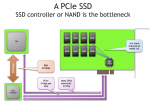
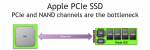
As techies moan about the lack of upgrade options presented by a soldered in SSD, they miss the bigger industry picture. For too long, computers have been held back by traditional SCSI and ATA controllers. These are both a performance bottleneck and an impediment to innovation. A shift to an integrated PCI storage model makes much sense tactically and strategically for Apple, and I expect that these rumors are true. Furthermore, this move will put even more stress on Windows PC makers. Once again, Apple is outmaneuvering the competition.

Are Hybrid Hard Drives A Good Alternative To An SSD?

Capacity, performance, or low cost: Pick two!

How well does the Momentus XT perform in a Mac laptop? Focusing on lower cost and greater benefit without getting taken in by the coolness of SSDs or hybrid drives, let’s weigh the merits.

Toshiba Offers “Blade” SSDs (Like Apple’s MacBook Air)

It won't be long before other manufacturers adopt the new SATA SSD form factor introduced in the MacBook Air

More information about the unconventional SSD used in Apple’s new MacBook Air. As I discussed in my previous coverage of this new flash form factor, it resembles a PCI Express Mini Card but is much smaller. Toshiba has now proved my speculation that the device uses SATA signals rather than the PCI Express lane used by the similar AirPort card. We also know that the lauded performance of the device is due to its chips and controller rather than skipping SATA in favor of PCIe as some had speculated.

Back From the Pile: Interesting Links, October 26, 2010

Here are my shared links from the first half of the week, featuring more Apple stuff along with storage, virtualization, and a storage gorilla!

Back From the Pile: Interesting Links, October 22, 2010

This week’s links focused on the MacBook Air, and Iomega’s USB 3.0 SSD. On the enterprise side, we have HP’s new training programs, server virtualization assumptions, the rise of the storage industry, and another great piece by Chris Evans.

Apple’s Unconventional New MacBook Air SSD

The new MacBook Air includes tiny SSD and AirPort cards

Apple updated the ultra-slim don’t-call-it-a-netbook MacBook Air this week. Along with a wimpy out-of-date CPU, the new Air features all-SSD storage of an entirely new and apparently proprietary type. Let’s take a look and see what we can see.

Apple Replaces Operating System DVDs with the Software Reinstall Drive

This is Apple's new OS reinstallation media: A read-only flash drive

Along with the apparent Mini PCI-E SSD, Apple introduced another storage feature with the late-2010 MacBook Air: The Software Reinstall Drive. Although not mentioned in the product introduction, the read-only USB drive is a clever solution for a device with no optical drive. Here’s what I’ve discovered about it so far.