Thoughts on Mark Lewis’ Future Storage

EMC’s Mark Lewis posted another thoughtful “blog episode”, outlining five predictions he has for the next few years. I don’t really agree with him much more than I did the last time, but it’s an interesting read nonetheless! Continue Reading »

Enterprise storage

Comments

Permalink

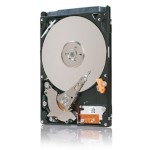
Specialized Desktop Hard Drives

I will begin my overview of the specialized hard drive market with the ubiquitous desktop disk drive. While just about any drive could be used in a desktop computer, the class is generally defined by what it lacks - compact size, power efficiency, exotic interfaces, special drive features, and high performance are all generally not required.

My survey did reveal a surprising range of devices, even given these limited requirements. Although no 5400 RPM drives are currently being sold for desktop use, there is (one) 10,000 RPM desktop drive! And a few of the larger drives are showing up with mondo caches - up to e32 MB! I bet these cache sizes will put the squeeze on hybrid drives…

Really, desktop drives are mostly notable for what they are doing to the enterprise market, which I’ll cover tomorrow. But for now, click through for the full story on the desktop drive market!

Continue Reading »

Enterprise storage
Terabyte home

Comments

Permalink

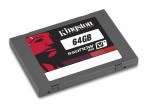
Wherefore Art Thou, Solid State Disks?

Sure, hybrid drives are going nowhere fast in enterprise storage. But what about solid state disk technology? It’s been “almost there” for decades - anyone remember EMC’s solid-state Orion Atom (or was it Adam) array?

Now a handful of storage players are talking about SSD’s again, including some respectable names like LSI and Xiotech and some lesser-known outfits like Solid Data Systems and Texas Memory Systems. IDC is predicting mainstream uptake of the technology, too, but note that they’re mostly talking about the PC market, not enterprise storage.

I say that if SSD ever gains footing in the enterprise, it’ll most likely be in a virtualized hybrid system, acting like a mega-cache. Or maybe a non-RAM permacache, if you will! Of course, we’ve seen just how much uptake that feature has had, eh EMC? But hey, it could happen. Even though Apple is soaking up more than a quarter of the world’s NAND flash this year, maybe they’ll force prices down. Or maybe Samsung’s or Hynix’s PRAM will conquer the world!

Let’s get serious, folks. What good is SSD? It improves random access read performance over disk at the expense of longevity, throughput, and, well, expense! ReadyBoost looked like a nice application for flash memory, since the potential content was bounded and could fit on a flash drive, but it seems to have done precisely nothing for performance.

If enterprise applications could benefit from better random access performance, we’d be putting large amounts of memory in front of the disks already. Oh, wait, that’s right, we already do that! Modern enterprise arrays have gobs of cache, more than any SSD, and use it quite effectively. Remember the old RAID-5 penalty?

SSD just serves to remind me of one of those performance-tuning axioms I learned long ago: It’s always better to let an intelligently-designed system manage itself than try to second-guess it. This applies to all areas of system performance tuning, from filesystem and LUN layouts to cache tuning. And this is why permacache and things like it never caught on.

And it’s why SSD will continue to play just a bit part in the enterprise until it’s just as cheap as disk. Like that’ll happen anytime soon.

Edit: Looks like I got the name wrong - the EMC SSD was the Orion.  Introduced in 1989, this evolved into the Symmetrix in 1992.  I used one of these back at Texaco in the 1990’s.

Apple
Computer history
Enterprise storage

Comments

Permalink